Relationships & Emotional Patterns

This category focuses on relationship dynamics, emotional attachment, trust issues, trauma bonding, manipulation, and modern dating fatigue. It examines why relationships feel more complex today and how unconscious emotional patterns shape connection, attraction, and conflict.

DARVO in relationships illustrated by a confused woman on a sofa while her partner points at her in a tense blame-reversal moment.

DARVO in Relationships: When They Turn the Blame on You

DARVO in relationships is one of the most confusing manipulation patterns because it flips reality in seconds. One moment you are calmly expressing a concern. The next moment, you are defending yourself as if you did something wrong. The term…

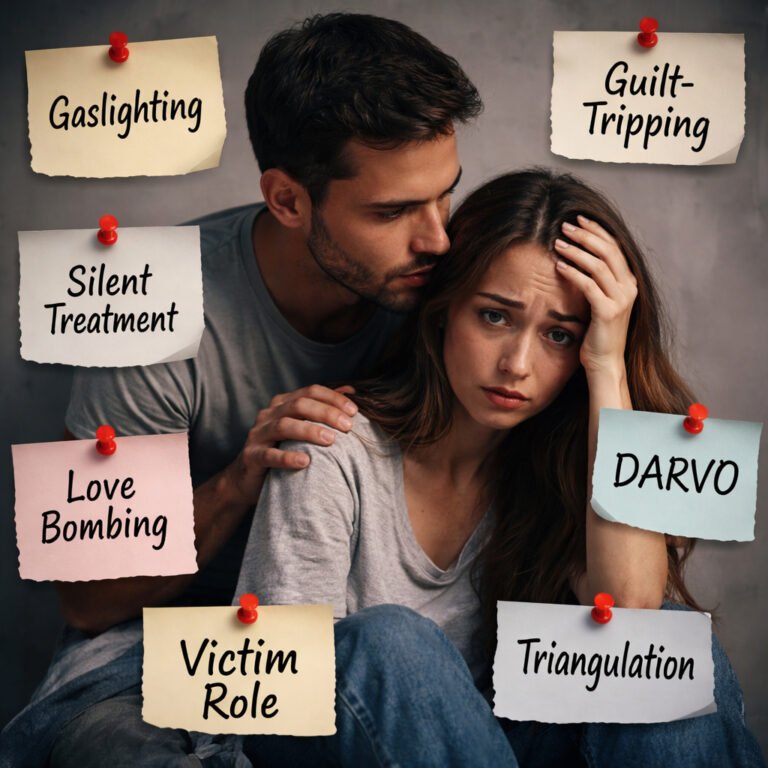
Manipulation tactics in relationships shown through a couple surrounded by labels like gaslighting, guilt-tripping, silent treatment, DARVO, love bombing, triangulation, and victim role

The 7 Most Common Manipulation Tactics in Relationships

Manipulation tactics in relationships are rarely obvious. Most people imagine manipulation as shouting, threats, or open cruelty. However, in real life, it’s usually quiet. Instead, it hides behind “concern,” jokes, guilt, confusion, and emotional pressure. If you’ve ever felt like…

Why People Pleasing Feels Safe

Why People Pleasing Feels Safe — and Why It Slowly Drains You

People pleasing rarely looks like a problem.From the outside, it often looks like kindness, flexibility, emotional intelligence, or being “easy to be around.” Yet many people who constantly adapt, accommodate, and smooth things over feel quietly exhausted — even when…

Childhood Habits: How Early Patterns Shape Adult Life

Childhood Habits That Affect You in Adult Life

Childhood habits often shape adult behavior in quiet, invisible ways. Many reactions, coping styles, and emotional patterns we carry into adulthood were formed early — long before we had awareness or choice. Some habits don’t feel like habits at all.They…

Emotionally Unsafe Relationship: Wanting to Go Home

When You’re at Home but Still Want to Go Home

Living in an emotionally unsafe relationship creates a unique kind of exhaustion. It’s not caused by work, lack of sleep, or external stress. It comes from sharing a space where emotional safety is missing — so much so that even…